
Why Older Millennials Are the Last Generation to Remember Pre-Internet Life
A
By Asaf Been on November 12, 2026
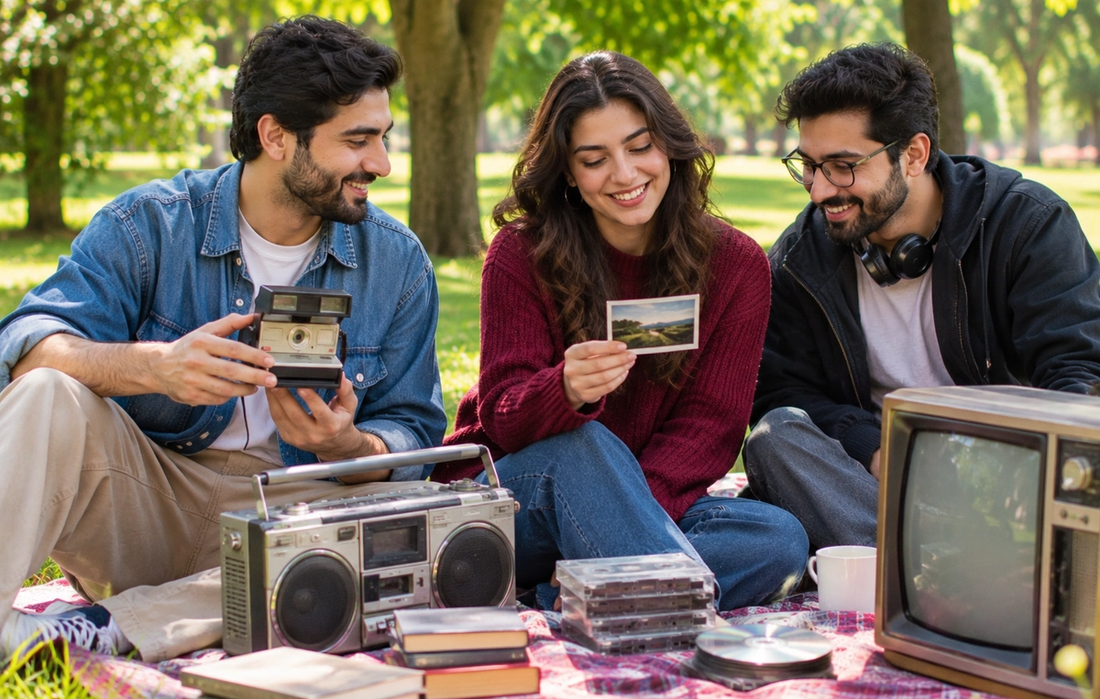
Older millennials occupy a strange place in technological history. They grew up with television, landlines, paper maps, handwritten notes, and afternoons when nobody knew exactly where their friends were. Then, while they were still young, the internet arrived and gradually transformed almost every part of daily life. That makes them one of the last generations with clear memories of adulthood’s digital world not yet existing.
Childhood Happened Mostly Offline
For many older millennials, childhood entertainment didn’t involve an internet connection. You watched whatever was on television, listened to CDs or cassettes, played outside, rented movies, read magazines, and called friends on their home phones. If you wanted to know something, you asked someone, looked it up in an encyclopedia, or simply remained curious until you found the answer.
Being bored was normal because there wasn’t an endless stream of content available to eliminate every empty moment.
Then the Internet Slowly Arrived
The transition didn’t happen overnight. First came family computers and dial-up connections. Then email, chat rooms, instant messaging, search engines, and personal websites became part of everyday life. Eventually broadband arrived, followed by social media, smartphones, apps, streaming, and permanent connectivity.
Older millennials didn’t simply grow up with the internet. Many remember learning how to incorporate it into a life that already existed.
Being Unreachable Was Completely Ordinary
Before mobile phones became universal, leaving home meant becoming difficult to contact. Friends agreed where and when to meet beforehand. Parents couldn’t track a child’s location on a map. If someone didn’t answer the landline, you tried again later.
Today, being unreachable for several hours can feel unusual. For people who remember the earlier world, however, constant availability still feels relatively new.
Growing Up Was More Private
Teenage mistakes once had a much better chance of disappearing. Embarrassing conversations weren’t automatically stored in message histories, awkward nights weren’t documented by dozens of cameras, and childhood photographs usually remained in physical albums.
Older millennials experienced adolescence before having a permanent public profile became normal, then entered adulthood just as social media began changing the meaning of privacy.
They Remember Both Worlds
That’s what makes this generation’s experience unusual. They remember waiting for photographs to be developed and taking unlimited smartphone photos. They used paper maps and then watched GPS make them unnecessary. They remember life before search engines and now live in a world of generative AI.
Of course, the boundary isn’t perfectly defined by generation—technology arrived at different times depending on country, household, and access. But many older millennials genuinely remember both sides of one of the biggest cultural transitions in modern life.
They didn’t leave the offline world behind all at once. They watched it gradually become connected, searchable, shareable, and always available. And perhaps that’s why nostalgia for life before the internet can feel so powerful: it isn’t nostalgia for a distant historical era. It’s a memory of a world that disappeared within their own lifetime.
Why Older Millennials Are the Last Generation to Remember Pre-Internet Life
Older millennials occupy a strange place in technological history. They grew up with television, landlines, paper maps, handwritten notes, and afternoons when nobody knew exactly where their friends were.
Asaf Been|5m ago

The Quiet Loneliness of the Always-Busy Generation
Roi Kad|11m ago

Why “Having It All” Was Always a Trade-Off for Us Too
German Smolyar|14m ago

The Real Difference Between Being Busy and Being Effective
Julian Doyle|17m ago
Why Older Millennials Feel Like the Forgotten Generation
Moran Sally|20m ago
The Hidden Cost of Being the First Generation to Figure It Out Online
Drew Larson|22m ago
Read More
Why Older Millennials Are the Last Generation to Remember Pre-Internet Life
Asaf Been|
The Quiet Loneliness of the Always-Busy Generation
Roi Kad|
Why “Having It All” Was Always a Trade-Off for Us Too
German Smolyar|
The Real Difference Between Being Busy and Being Effective
Julian Doyle|
Why Older Millennials Feel Like the Forgotten Generation
Moran Sally|
The Hidden Cost of Being the First Generation to Figure It Out Online
Drew Larson|