
The Hidden Cost of Being the First Generation to Figure It Out Online
D
By Drew Larson on November 12, 2026
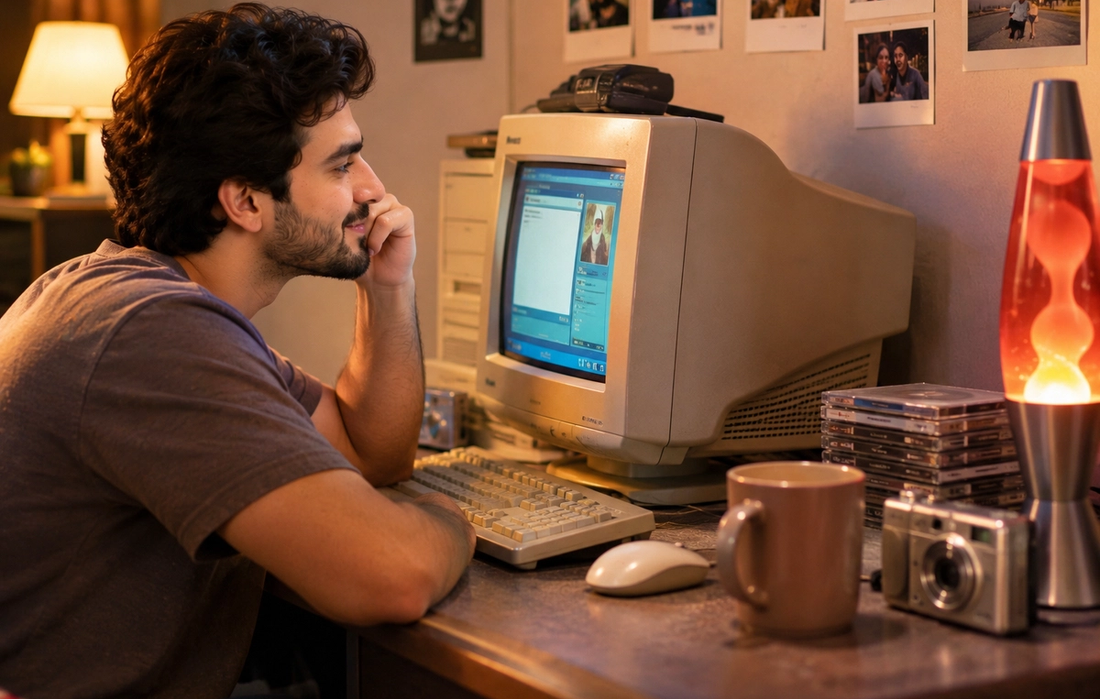
Older millennials didn’t just watch the internet grow—they were among the first people expected to build adult lives inside it. There was no established guide for social media, online dating, personal branding, constant availability, or what it meant to leave years of your life scattered across the internet. Much of it was exciting. But being the generation that figured it out in real time came with costs nobody fully understood yet.
We Learned the Rules After Breaking Them
Early internet culture felt surprisingly casual. People posted embarrassing Facebook albums, wrote personal thoughts on blogs, shared too much on forums, and chose usernames they assumed nobody would remember ten years later.
There wasn’t much awareness of a “digital footprint” because nobody knew exactly how permanent the internet would become. The rules about privacy, reputation, and oversharing developed only after millions of people had already experimented publicly.
Social Media Changed While We Were Using It
Social platforms initially felt like places to connect with people you already knew. Gradually, they became spaces for news, entertainment, advertising, careers, shopping, politics, and personal branding.
The expectation changed too. It was no longer enough to simply have a life; increasingly, there was pressure to document it. Birthdays, relationships, holidays, careers, homes, and eventually children could all become part of an ongoing public narrative.
Work Followed Us Home
The internet also blurred a boundary previous generations understood more clearly. Once email, messaging apps, and smartphones became standard, leaving the office no longer necessarily meant leaving work.
Being reachable became normal. Quick replies became expected. Even when nobody explicitly demanded constant availability, knowing that work was sitting in your pocket made completely switching off harder.
We Became the Experiment
There was no long-term research showing what decades of social media would do to attention, relationships, privacy, or self-image when people first started using it. There couldn’t be. The technology was too new.
So an entire generation learned through experience: which parts of online life were useful, which were exhausting, and which boundaries should probably have existed from the beginning.
Now We’re Learning to Log Off
Perhaps that’s why so many people who once loved being online now romanticize quieter digital lives. They miss smaller communities, chronological feeds, personal websites, and an internet that didn’t seem to demand attention every waking hour.
The irony is that the generation that helped normalize being constantly online may also be among the first to deliberately pull back from it.
Being first meant experiencing extraordinary possibilities without knowing the consequences. We learned how to live online before anyone could teach us how to protect ourselves from too much of it. And now, after decades of connection, one of the newest skills we’re learning is when to disconnect.
Why Older Millennials Are the Last Generation to Remember Pre-Internet Life
Older millennials occupy a strange place in technological history. They grew up with television, landlines, paper maps, handwritten notes, and afternoons when nobody knew exactly where their friends were.
Asaf Been|6m ago

The Quiet Loneliness of the Always-Busy Generation
Roi Kad|11m ago

Why “Having It All” Was Always a Trade-Off for Us Too
German Smolyar|14m ago

The Real Difference Between Being Busy and Being Effective
Julian Doyle|17m ago
Why Older Millennials Feel Like the Forgotten Generation
Moran Sally|20m ago

The Hidden Cost of Being the First Generation to Figure It Out Online
Drew Larson|22m ago
Read More
Why Older Millennials Are the Last Generation to Remember Pre-Internet Life
Asaf Been|
The Quiet Loneliness of the Always-Busy Generation
Roi Kad|
Why “Having It All” Was Always a Trade-Off for Us Too
German Smolyar|
The Real Difference Between Being Busy and Being Effective
Julian Doyle|
Why Older Millennials Feel Like the Forgotten Generation
Moran Sally|
The Hidden Cost of Being the First Generation to Figure It Out Online
Drew Larson|